







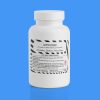
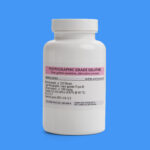
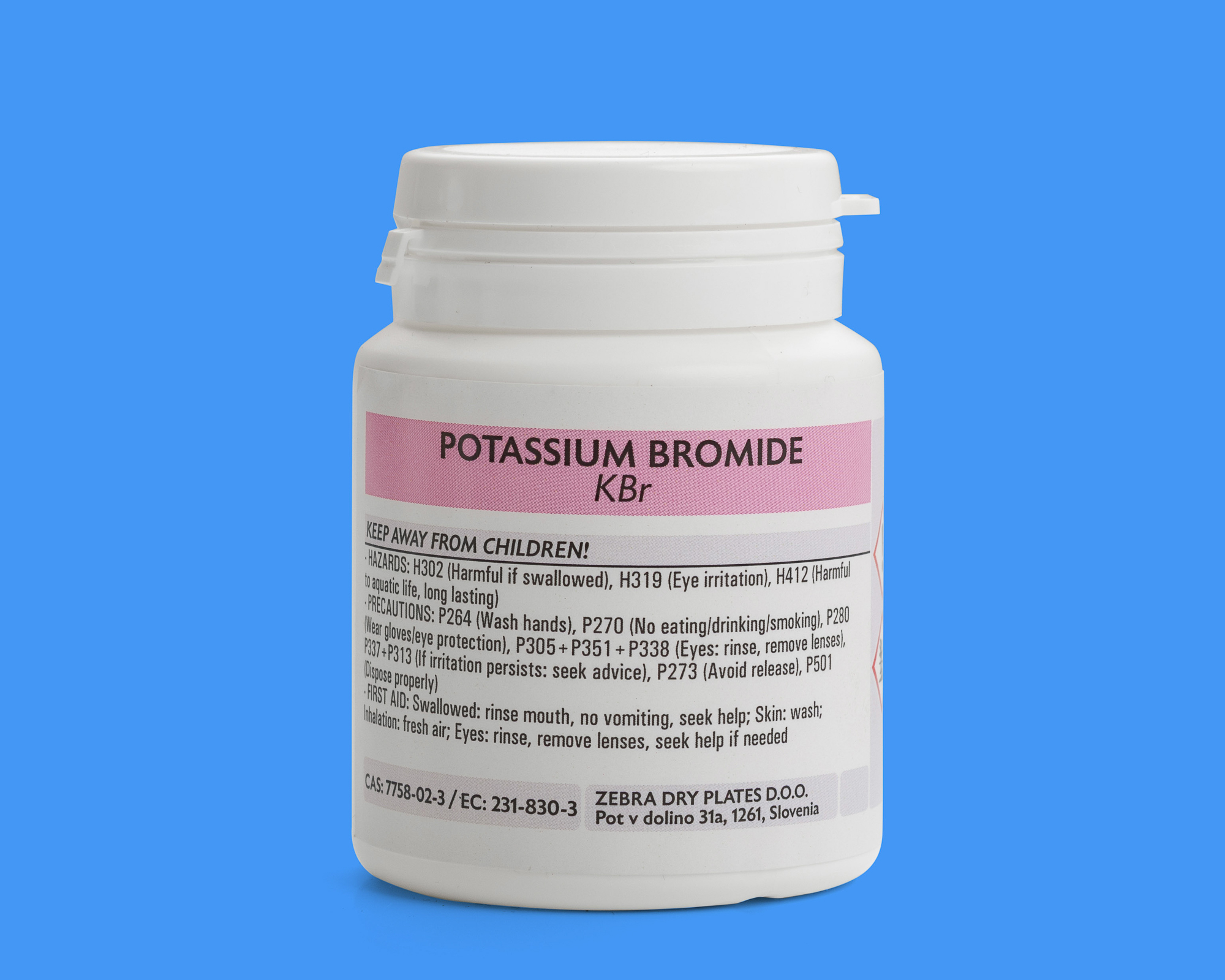
Potassium Bromide (KBr) is a key halide salt used in traditional and experimental photographic chemistry. It plays a critical role in the formation and control of silver bromide crystals, making it essential for both silver gelatin emulsions and various historical photographic processes.
In silver gelatin emulsion making, potassium bromide reacts with silver nitrate to form light-sensitive silver bromide — the foundation of modern and historical black & white photographic materials. It directly influences grain structure, contrast, and sensitivity, making it indispensable for emulsion design and experimentation.
Within wet plate collodion, potassium bromide is commonly used alongside iodides to create balanced emulsions with controlled contrast and tonal range. It contributes to image density and helps refine highlight and shadow separation.
Beyond these core uses, potassium bromide is widely employed across alternative photographic techniques, including:
– Dry plate photography
– Collodion emulsion experiments
– Photographic paper emulsion making
– Salted paper variations (salt print, van dyke, albumen, kallitype…)
– Cyanotype toning experiments
Our photographic-grade potassium bromide ensures consistent, reliable results whether you’re coating your own plates, refining emulsions, or exploring historic processes.