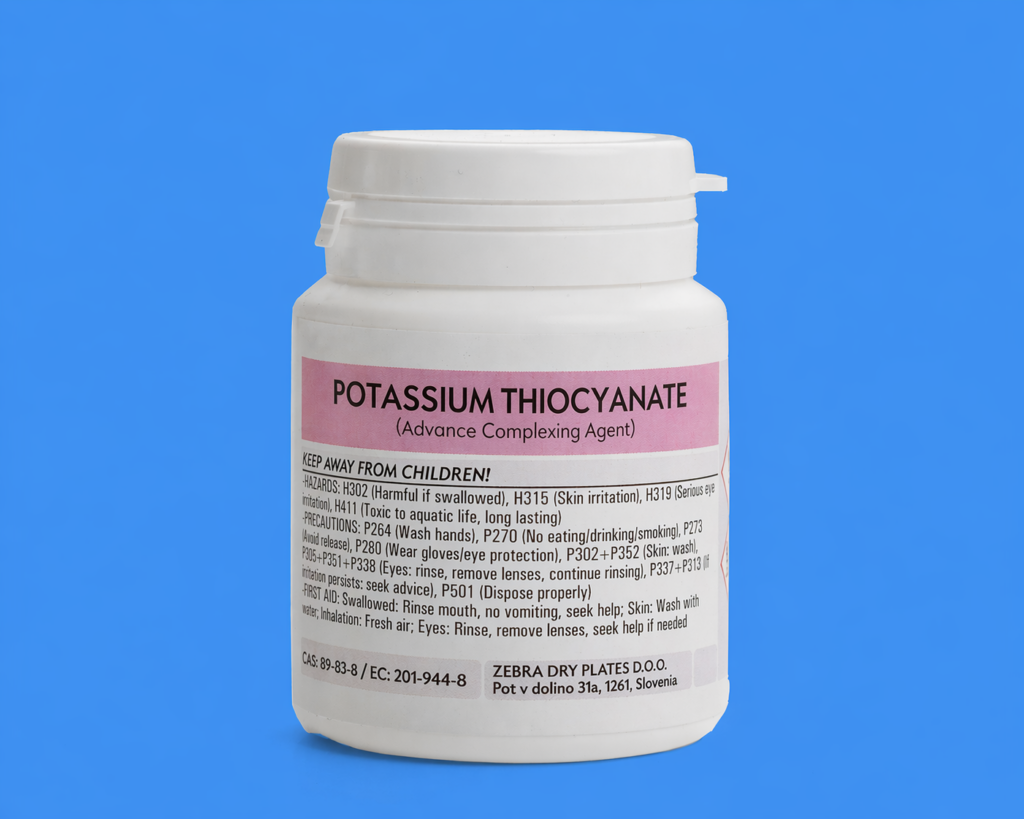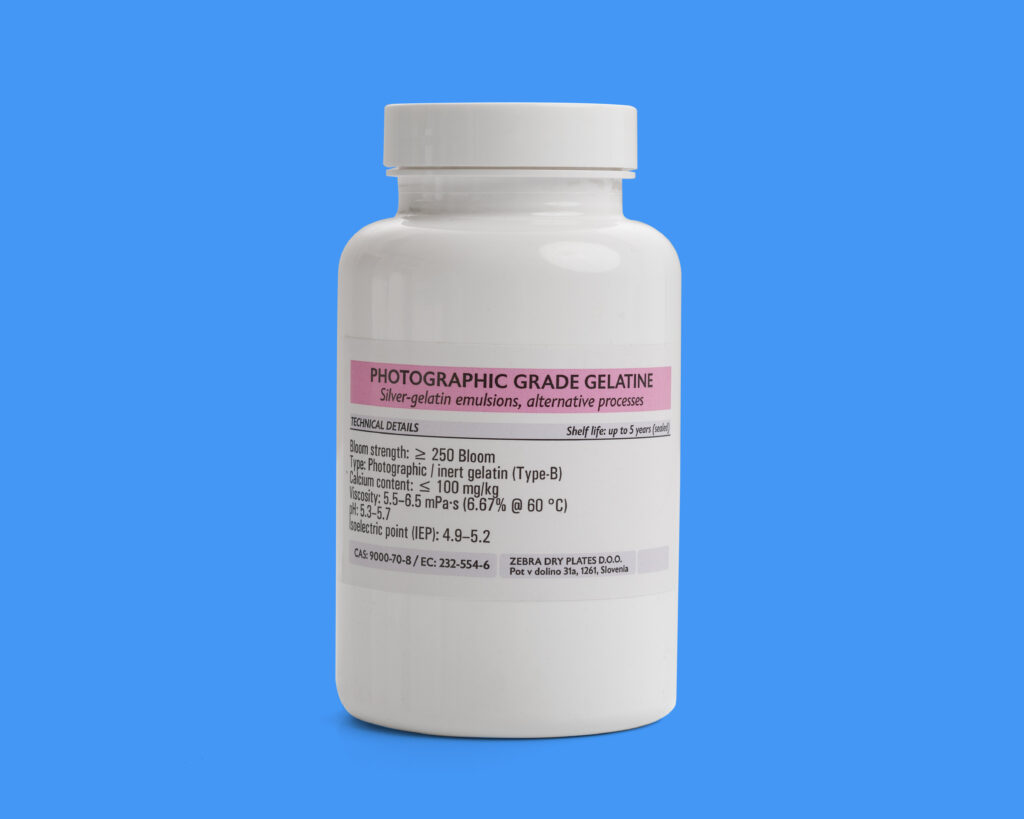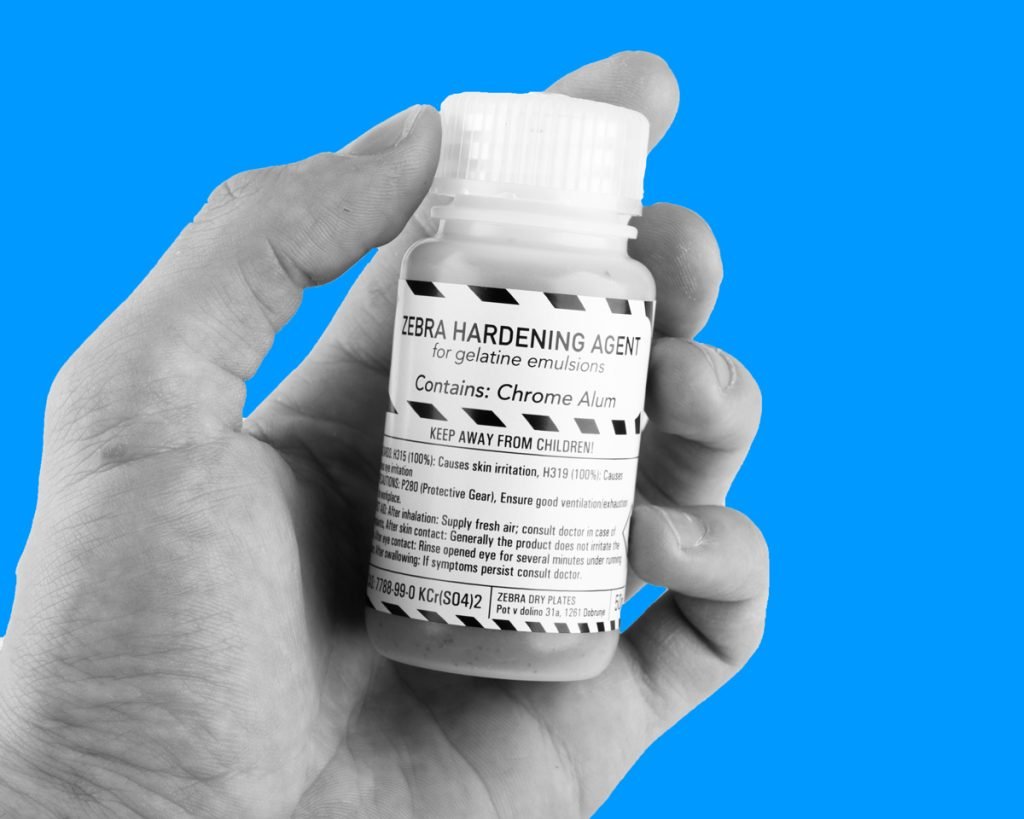


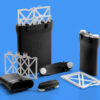
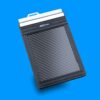




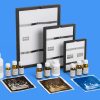
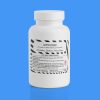
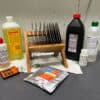

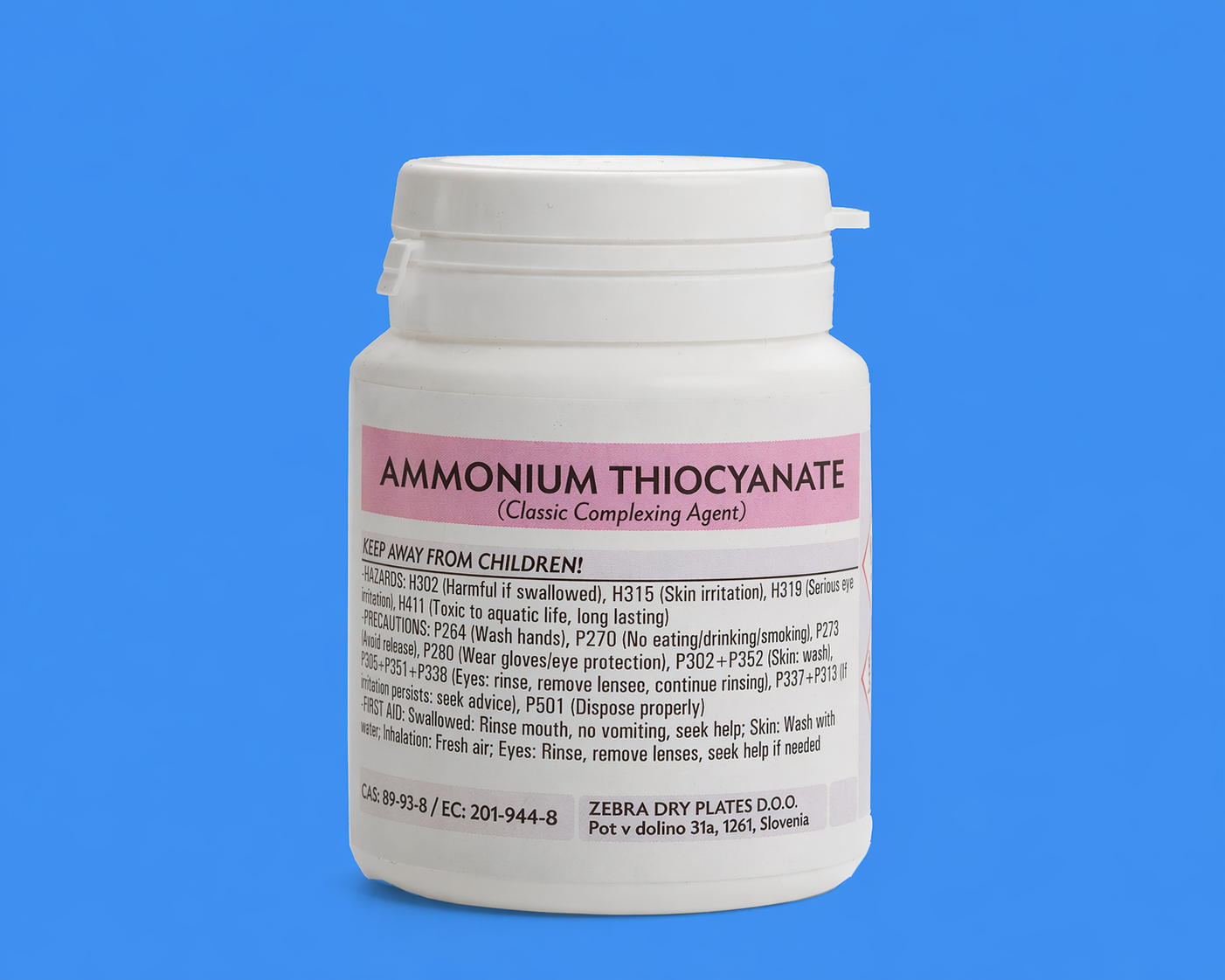
The Classic Complexing Agent (Ammonium Thiocyanate) is the traditional choice for creating direct positive tintypes on Zebra Dry Plates. Used in combination with HC Developer, it works by dissolving and redepositing silver onto the plate’s surface, effectively bleaching the negative image white. When used with Zebra Dry Plate Tintypes or black glass plates, this results in a direct positive image.
This classic formulation is valued for its distinctive rendering and hands-on control. The amount used must be carefully adjusted depending on the emulsion and desired result. For Zebra Dry Plate Tintypes, a working solution of 2–3g per 300ml is typically recommended.
Image tone is directly influenced by how silver is deposited during development. The size of the silver particles determines the final hue:
– Lower quantities produce larger particles and warmer, creamy whites
– Higher quantities produce finer particles and cooler, bluish tones
Development time and lighting temperature further shape the final look. A well-balanced process yields a soft, milky white image, while extended development can shift tones toward cooler shades. For example, increasing the amount to 7gcan introduce a pronounced Prussian blue character.
25g is sufficient for developing approximately 10–20 4×5 Zebra Dry Plates.
* For those seeking even greater consistency, control, and efficiency, we now offer an improved alternative the Advanced Complexing Agent (Potassium Thiocyanate) which builds on this classic process with enhanced performance. However, the Classic Complexing Agent remains available for photographers who prefer its traditional look and workflow.
** Fore details and recipes check out the Zebra Dry Plate Tintype User Manual available HERE.
****For Chemical Safety Summary Datasheet click HERE.